
Spin Spectroscopy Measurement Experimental Protocol Graviton Physics
Rajan Iyer 
1Environmental Materials Theoretical Physicist, Department of Physical Mathematics Sciences Engineering Project Technologies, Engineeringinc International Operational Teknet Earth Global, Tempe, Arizona, United States of America, .
http://dx.doi.org/10.13005/OJPS10.02.05
This document outlines a comprehensive experimental protocol designed to investigate graviton parameters through advanced measurement techniques utilizing Spin Spectroscopy. The proposed methodology builds upon a theoretical framework that examines the relationship between classical particle charge-to-mass ratios and their intrinsic quantum spin properties. The primary objective is to determine whether spin-2 gravitational signatures can be detected, thereby providing empirical evidence supporting a grand unifying quantum gravity model.
The protocol emphasizes systematic quantum measurements, including analyses of Thomas precession, Bohr magneton coupling, and Compton-wavelength scattering phenomena involving particles such as fermions and bosons. These measurements aim to generate perturbation property plots, which serve as metrics to distinguish different signatures associated with gravitational interactions at the quantum level. High-precision particle beam instrumentation is central to this approach, enabling the indirect assessment of gravitational coupling phenomena within quantum regimes.
By integrating empirical spectroscopy with theoretical models, this approach seeks to establish a bridge between observable quantum effects and the broader framework of quantum gravity. The implications extend to the potential unification of fundamental forces and the detection of weak spin-coupled electromagnetic gravitational fields. The methodology also considers the employment of proper reference frames to enhance measurement accuracy and reliability, ultimately contributing to the advancement of experimental quantum gravity research and the validation of theoretical predictions in this domain now.
Copy the following to cite this article:
Rajan Iyer. Spin Spectroscopy Measurement Experimental Protocol Graviton Physics. Oriental Jornal of Physical Sciences 2025; 10(2).
DOI:http://dx.doi.org/10.13005/OJPS10.02.05Copy the following to cite this URL:
Rajan Iyer. Spin Spectroscopy Measurement Experimental Protocol Graviton Physics. Oriental Jornal of Physical Sciences 2025; 10(2).Avialable here:
Download article (pdf) Citation Manager Publish History



Introduction:
The quest to identify graviton, a hypothetical quantum particle responsible for mediating gravity, remains a central challenge in fundamental physics. Detecting the graviton directly has proven difficult due to its presumed extremely weak coupling with matter15,17,18, which renders traditional detection methods ineffective. Consequently, researchers have turned to indirect approaches, analyzing trends across known particle spectra to infer properties of the graviton. Recent theoretical advancements, including innovative spin spectroscopy techniques, aim to explore these properties by examining long-range spin–spin interactions that could be influenced by graviton exchange.1-38
Current experimental efforts leverage atomic-ensemble and nitrogen-vacancy (NV) center methods, achieving energy sensitivities on the order of 10?19?eV. These sensitivities open new avenues for testing gravity-induced spin effects over long distances, providing promising prospects for future research10, 14, 17, 28, 37, 38. The primary goal is to develop an experimental methodology capable of detecting subtle patterns in charge-to-mass ratio trends across different spin quantum numbers. Such patterns, if consistent, could support the hypothesis that these trends extrapolate to the properties of the graviton entity.
Incorporating relativistic quantum effects—such as Thomas precession, the Bohr magneton, and Compton scattering—into measurement designs enhances the sensitivity to spin-dependent phenomena5, 6, 28, 38. If these observed trends extend coherently to spin-2 particles, it may be possible to identify the graviton's signature through experimental data. The proposed approach involves a mathematically programmable algorithm based on a rank-6 tensor description of time29, 30. This algorithm aims to detect modifications in particle spin precession caused by coupling constants, which could manifest as predictable deviations in spin spectral lines. High-precision measurement grids are essential for observing these deviations and potentially confirming the presence of gravitonic effects.
Furthermore, selecting appropriate reference frames is crucial for achieving meaningful results31. Proper frame choices can significantly influence the interpretation of experimental data and facilitate breakthroughs in understanding gravitational quantum effects. The development of innovative technologies will be instrumental in indirectly sensing the elusive graviton, advancing our comprehension of quantum gravity and the fundamental structure of the universe.
1.1 Aim
The research aims to develop an innovative experimental protocol that integrates quantum spin resonance, precise timing mechanisms, and torsional pendulum setups to investigate fundamental physical phenomena. The primary objectives include detecting frequency shifts that could indicate graviton-induced spin coupling and identifying parity-violating signatures potentially modulated by proposed tensor-time fields.
1.2 Paper Outline
The study is structured into several comprehensive sections. Section 2 elaborates on the experimental methodology, detailing the design parameters, sensitivity analysis, and potential sources of error. This section provides a thorough overview of the technical aspects necessary for accurate measurement and data collection.
Section 3 focuses on the expected outcomes, supported by simulation graphics illustrating typical phase shifts, signal spectra, and spin spectroscopic measures. These measures include the electron, muon, and tau fermions, as well as neutrinos, photons, W and Z bosons, and the Higgs boson. The analysis aims to extrapolate potential graviton signatures and assess the statistical reach of the experimental setup in detecting these phenomena.
Finally, Section 4 offers a comprehensive discussion, including the outlook for future research and potential operational projects. It also outlines funding opportunities and strategies for advancing scientific, technological, engineering, and mathematical (STEM) fields through these experimental endeavors. The overall goal is to contribute to the understanding of quantum gravity and fundamental particle interactions, fostering advancements in theoretical and applied physics.
Materials and Methods
Experimental Methodology Propositions
2.1 Design of Laboratory Apparatus for Experimental Investigation of Spin Effects 4,8
This study introduces a novel experimental setup utilizing an ensemble of nitrogen-vacancy (NV) centers embedded within diamond substrates. These centers are strategically positioned in proximity to a rotating mass distribution, aiming to amplify gravity-induced spin phenomena, as illustrated in Figure 1. The proposed configuration seeks to facilitate precise measurements of gravitational effects on quantum spin states, thereby contributing to the understanding of fundamental physics and potential applications in quantum sensing technologies.
Theoretical Sensitivity Estimate
Based on Iyer’s rank-6 model, the modification of the spin precession rate, quantified by having ?=?A T?????? u? S? S? S? S? S?, due to gravitational effects can be characterized by a shift in the angular frequency, denoted as observable ??. This shift reflects the influence of gravitational or tensor time fields, potentially induced by gravitons, on the spin dynamics of the particles. The model incorporates several key parameters and theoretical constructions. A stepwise explanation of the above equation is given below:
Coupling Constant (?A):: A small, dimensionless or dimensional parameter representing the interaction strength between the spin system and higher-order gravitational fields. The subscript 'A' designates a specific component within the experimental setup.
Rank-6 Tensor of Time (T??????): A theoretical entity encoding higher-order spacetime or temporal curvature effects, possibly arising from a graviton background or a generalized metric-affine geometry. This tensor captures complex interactions within the gravitational field, extending beyond classical descriptions.
Four-Velocity Vector (u?): The normalized four-velocity of the particle or observer carrying the spin, with u? satisfying u?u? = -1. It defines the temporal direction in spacetime and is essential for relativistic descriptions of spin interactions.
Spin Four-Vectors (S?,S?,S?,S?,S?): These vectors represent the orientation of the spin S within four-dimensional spacetime. The presence of multiple spin vectors indicates a tensor product structure, which may model higher-order spin interactions, such as spin-5 couplings of ?, ?, ?, ?, and ?. For fermions (spin-½), this formalism suggests complex interaction terms involving composite spin observables.
The interaction terms involving multiple spin vectors are sensitive to phenomena such as quantum spin entanglement, symmetry related properties, and parity transformations. Specifically, under spatial inversion (parity), these products may change unless symmetrically contracted, implying potential observable effects in experiments that are designed to detect the violation of parity.
Furthermore, these interactions could induce minute shifts in energy levels of spin systems, depending on their orientation and motion. Such shifts are measurable through high-precision techniques including spin resonance spectroscopy, atomic interferometry, and nitrogen-vacancy (NV) center spectroscopy. The expected frequency shifts are within the range of ?f: 10-20 to 10-18 eV, approaching the shot noise limit of current experimental capabilities. These measurements provide a pathway to test the influence of higher-order gravitational fields and tensor interactions predictable by advanced theoretical models.
Quantum Projection Noise on Phase : .png)
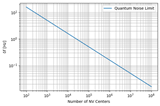
The standard deviation of phase measurement uncertainty attributable to quantum projection noise is a critical parameter in quantum metrology. This uncertainty is influenced by the number of independent quantum spin particles (1/?N) involved in the measurement, such as the NV centers in the diamond. An increase in the number of particles generally results in effective reduction of measurement uncertainty, owing to statistical averaging effects. Specifically, the quantum projection noise diminishes proportionally to the inverse square root of the particle count, reflecting a fundamental limit imposed by quantum mechanics on the achievable measurement precision. This relationship underscores the importance of optimizing particle numbers within the experimental designs to enhance measurement accuracy, while acknowledging the inherent quantum limits that govern the precision of phase measurements in quantum systems.
The Frequency Resolution from Quantum Noise: ?f_quant=1/(2?T_2 ?N), where ?fquant: Minimum resolvable frequency shift due to quantum noise; T2: Coherence time of the spin system (spin dephasing time); ?N: Enhances sensitivity via ensemble averaging; 2?: Converts from angular frequency to regular frequency.
Interpretation: The longer the coherence time and the more spins used,the finer the resolution in frequency
(energy)measurements.
The coherence time of the spin system, also known as the spin dephasing time, is a critical parameter in quantum and magnetic resonance studies. It determines how long the spin states remain coherent before losing their phase relationship due to interactions with the environment. Enhancing this coherence time is essential for improving the sensitivity of measurements and the performance of quantum devices. One effective method to achieve this enhancement is through ensemble averaging, which involves aggregating signals from multiple spins to reduce noise and increase the overall signal-to-noise ratio. This technique allows for more precise detection of weak signals and improves the reliability of experimental results. Understanding and optimizing the coherence time of spin systems are fundamental steps in advancing technologies such as quantum computing, magnetic resonance imaging, and other applications that rely on spin dynamics. By focusing on methods to extend the coherence time, researchers can significantly improve the sensitivity and accuracy of their measurements, leading to more robust and reliable scientific outcomes.
Magnetic Field Noise Contribution to Phase: ??B=?e ?B?Tfree, where ??_B: Phase error due to ambient magnetic field fluctuations; ?e: Gyromagnetic ratio for the electron ?e?28?GHz/T; ?B: Magnetic field fluctuation amplitude (in tesla); T_free: Free evolution time in a Ramsey type or spin echo experiment.
Interpretation: Even small magnetic field drifts can induce large phase errors if Tfree is long - requiring magnetic shielding or active compensations.
In the realm of quantum physics and magnetic resonance studies, the gyromagnetic ratio of the electron is a fundamental constant that relates the magnetic moment of an electron to its angular momentum. This ratio is crucial in understanding electron spin behavior in magnetic fields and is widely used in techniques such as Electron Spin Resonance (ESR). The magnetic field fluctuation amplitude, measured in tesla, indicates the variations in magnetic field strength, which can influence electron spin states and resonance conditions. Accurate measurement and analysis of these fluctuations are essential for applications in magnetic sensing, quantum computing, and material characterization. Larmor frequency ? of precession of a particle in a magnetic field of B is given by: ?=?B.
Furthermore, the relationship between magnetic field fluctuations and the gyromagnetic ratio provides insights into the stability and coherence of spin systems under varying magnetic environments. Researchers often analyze these parameters to optimize experimental conditions and improve the sensitivity of magnetic resonance techniques.
In summary, understanding the interplay between the gyromagnetic ratio of the electron and magnetic field fluctuations is vital for advancing research in magnetic resonance and quantum physics. Precise quantification of these factors enables scientists to develop more accurate models and improve technological applications in various scientific and industrial fields.
Thermal Frequency Drift: ?fthermal? (df/dT)?T, where ?fthermal: Frequency drift caused by temperature changes; (df/dT): Sensitivity of frequency to temperature (e.g.,in Hz/K); ?T: Temperature fluctuation amplitude (in Kelvin). Interpretations: Many spin systems are sensitive to lattice vibrations or thermal expansion, so ultra-stable thermal environments (e.g. ±0.01 K) are essential.
The sensitivity of frequency to temperature variations, typically expressed in Hertz per Kelvin (Hz/K), is a critical parameter in the analysis of spin systems. These systems often exhibit a dependence on lattice vibrations and thermal expansion, which can influence their magnetic and electronic properties. Consequently, maintaining an ultra-stable thermal environment, with temperature fluctuations limited to approximately ±0.01 Kelvin, is essential for accurate measurements and reliable operation. Temperature fluctuation amplitude, measured in Kelvin, directly impacts the stability and performance of sensitive spin systems, necessitating precise thermal control in experimental setups and practical applications.
Mechanical Misalignment Error (Rotator): feff= fr cos?(?), where feff: Effective modulation frequency sensed by the detector; fr: True rotation frequency of the rotating mass; ?: Misalignment angle between rotation axis and measurement axis. Interpretations: Small angular misalignments reduce signal strength and introduce phase shift artifacts. Mechanical alignment must be precise (e.g. < 1 mrad).
This describes significance of alignment in rotating mass systems, emphasizing impact of the misalignment angles on measurement accuracy. Precise mechanical alignment is crucial to ensure reliable data and minimize artifacts in signal interpretation. Specifically, small angular misalignments can lead to a reduction in signal strength and introduce phase shift artifacts, which may compromise the integrity of the measurement results. To mitigate these issues, it is essential to maintain the misalignment angle below a specified threshold, such as less than 1 mrad. Achieving such precision requires meticulous setup and calibration of the measurement apparatus, underscoring the importance of rigorous alignment procedures in high-precision rotational measurements.
Total RMS Phase Error: ?total2= ??{2,quant} + ??{2,B} + ??{2,thermal} + ??{2,sys}, where ?total: Root mean square (RMS) of the total phase uncertainty; ??{2,quant}? Variance from quantum projection noise.; ??{2,B} : Variance from magnetic field noise; ??{2,thermal} : Variance from thermal drift; ??{2,sys}: Variance from all other systematic errors (e.g., mechanical, electronic). Interpretations: This gives the total experimental uncertainty, assuming independent sources of error. Experimental design goal is to minimize each term such that ?total???signal.
This discusses various sources of experimental uncertainty in a scientific context, emphasizing the importance of understanding and minimizing these errors to improve measurement accuracy. The key sources identified include:
Variance from quantum projection noise: This refers to the fundamental quantum fluctuations inherent in the measurement process, which can limit the precision of quantum state determinations.
Variance from magnetic field noise: External magnetic field fluctuations can introduce errors, affecting the stability and accuracy of measurements, especially in experiments sensitive to magnetic environments.
Variance from thermal drift: Temperature variations can cause physical components to expand or contract, leading to measurement deviations over time.
Variance from other systematic errors: These include mechanical vibrations, electronic noise, and other environmental factors that can systematically skew results.
In scientific experimentation, total uncertainty is often considered as the sum of these independent error sources. The primary objective in experimental design is to minimize each of these variances to enhance the overall precision and reliability of measurements. Achieving this will involve implementing strategies such as shielding from magnetic interference, stabilizing temperature conditions, and improving electronic and mechanical stability.
By systematically addressing each source of error, researchers can reduce the total experimental uncertainty, thereby increasing confidence in the results and enabling more accurate interpretations of the phenomena under investigations.
Summary of System Sensitivity and Uncertainty Factors
??quant= 1/?N: Quantum limit of phase resolution; ?f_quant=1/(2?T2 ?N): Frequency sensitivity limit from having the coherence time and number; ??B=?e ?B?Tfree: Phase error from magnetic field noise; ?f_thermal? (df/dT)?T: Thermal sensitivity of system; f_eff= f_r cos?(?): Signal modulation loss due to misalignment; ?_total^2= ??_i^2: Combined uncertainty from all sources.
The performance and accuracy of the measurement system are influenced by several critical factors. These include:
Frequency Sensitivity Limit: Determined by the coherence time and the number of measurement cycles, affecting the system's ability to detect and resolve signals accurately.
Phase Error: Induced by magnetic field noise, which can distort phase measurements and impact overall system precision.
Thermal Sensitivity: The system's response to temperature variations, which can alter measurement stability and accuracy.
Signal Modulation Loss: Resulting from misalignment, leading to reduced signal strength and potential data loss.
Combined Uncertainty: An aggregate measure of all individual sources of error, providing an overall estimate of measurement reliability.
Understanding and mitigating these factors are essential for enhancing system performance, ensuring measurement fidelity, and achieving reliable results in precision applications.
.png)
.png)
Figure?1: [a] Schematics of setup (NV ensemble, rotating mass, magnetic shielding modules). Key components: (i) Magnetic shielding (<10?nT); (ii) Rotating dense mass on precision stepper (?0.1?mm alignment); (iii) Hyperfine spin spectroscopy via Ramsey-type pulsing. [b] gives frequency sensitivity versus NV ensemble size. [c] gives systematic error source contributions.
Calibrations per Figure 1
• Calibration using known magnetic field modulations
• Introduction of a test “fictional graviton” signal (10?19 eV) to quantify sensitivity
Measurement Protocol Steps per Figure 1
Step | Action | Purpose |
|---|---|---|
A1 | Polarize NV spins via optical pumping | Preparatory spin state |
A2 | Apply spin-echo pulse sequence | Maximize coherence |
A3 | Rotate mass distribution periodically | Drive gravity modulated field |
A4 | Record phase shift ??(t), FFT at rotational frequency | Detect gravity-induced ?f. |
Systematics and Noise Control per Figure 1
• Magnetic shielding and active compensation
• Temperature stabilization to ±0.1?mK
• Rotation-vibration decoupled mount
• Control datasets: static rotating mass, electrically charged but non-rotating mass.
2.2 Spin Spectroscopic Measurement Experimental Design for CERN and other Institutions1: Graphing e/m ratio versus quantum spins of electron, muon, and tau fermions, as well as the neutrino, Photon, W Boson, Z Boson, Higgs Bosons measures to extrapolate potential Graviton signatures
2.2.1 Particle Spectrum Selection Criteria
We examine property graphing of known fermions and bosons: electron, muon, proton, neutron, photon, Z boson, and W boson. Charge and mass values are sourced from the Particle Data Group. Spin quantum numbers are assigned as per Standard Model definitions.
2.2.2 Charge-to-Mass Ratio Calculation Basis
Each particle’s typical e/m is computed, with appropriate error bounds. Photons and other massless particles serve as zero baselines for normalization purposes.
2.2.3 Thomas Precession and Magnetic Coupling
Particles are subjected to controlled magnetic fields in Penning traps or cyclotrons to measure spin precession. Microwave resonance tracks g-factor shifts, incorporating relativistic corrections via the Thomas-Bargmann-Michel-Telegdi equation in literature.
2.2.4 Compton Wavelength-Scale Probing
Targeted Compton scattering is used to examine spin-coupled electromagnetic deviations at relativistic energy thresholds. Scattering angles and cross-section asymmetries recording across spin states with graphing is part of the procedure.
2.2.5 Data Analysis
An empirical power-law is fitted to e/m vs. spin quantum number data. Extrapolation to spin-2 yields a predicted “graviton” charge-to-mass coupling, potentially distinguishable from what is known within Standard Model noise.
2.2.6 Reference frames31 will have to be chosen appropriately, depending on the measurement protocol accurately while avoiding spurious observational data and noise, to enable indirect effect sensing potentially hidden graviton parameters.
3. Expected Results
3.1 Laboratory Apparatus Experimental expectations based on 4, 8 and above methodology
Simulated Signal Plots
.png)
Sensitivity Map
Spin System | Coherence Time T? | Shot Noise Limit ?f (eV) |
|---|---|---|
NV center (single) | 1 ms | 10?18 |
NV ensemble (106 centers) | 100 ?s | 10?19 |
Atomic ensemble (T? = 1 s) | 500 ?s | 10?20 |
3.2 Spin Spectroscopic Measurement Experimental Simulations expectations1:
Graphing e/m ratio versus quantum spins of fermions, as well as bosons measures helping to extrapolate potential Graviton signatures
We expect the following:
• Power-law scaling of e/m with spin (e.g., e/m ? Sb; spin S, b=variable exponent).
• Observable precession-induced deviations in spin-1 vs. spin-1/2 particles.
• Compton-scale shifts correspond to effective coupling enhancements.
Extrapolation to spin-2 should yield a finite, though small, inferred charge-to-mass-like parameter—suggesting a novel pathway to test quantum gravity.
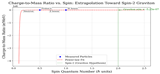
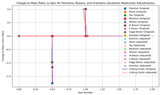
Figure 4 has been adapted with permission from Rajan Iyer, Particle charge mass spin spectroscopy ansatz physics. Physics & Astronomy International Journal, MedCrave Journal Publisher], 2015, https://doi.org/10.15406/paij.2025.09.00362. Permission granted by Copyright: ©2025 Iyer, MedCrave Physics & Astronomy International Journal.
4. Discussion, Outlook, Potential Operational Future Projects with accessible Funding Details
Advanced Research on Quantum Gravity and Graviton Detection
This comprehensive study explores innovative methodologies for detecting gravitons through laboratory-based experiments utilizing nitrogen-vacancy centers. The experimental setup, depicted in Figure 1, involves an ensemble of NV centers capable of producing measurable quantum effects, as illustrated in Figure 2. These effects, induced typically potentially by gravity-related spin phenomena, offer a promising pathway to detect gravitons, particularly near superluminal-vacuum interfaces, which could revolutionize our understanding of quantum gravity.
Spin Spectroscopy and Quantum Relativistic Effects
The research employs advanced spin spectroscopic techniques to analyze relativistic shifts caused by phenomena such as Thomas Precession, the Bohr Magneton, and the Compton Effect. These shifts influence classical electromagnetic and quantum spin properties, providing potential indicators of presence of graviton or hidden metrics within spacetime. The methodology leverages empirical spectroscopy to circumvent traditional assumptions about gravitational field strength, focusing instead on universal scaling laws across spin spectra. This approach exploits the gravitational analogs of electromagnetic constants, enabling a novel perspective on potential gravitational interactions at the quantum level.
Addressing Methodological Limitations
Despite its innovative nature, the proposed techniques face several challenges. Systematic errors stemming from electromagnetic field noise, oversimplifications in spin-orbit coupling models, and the inherent limitations of extrapolation methods must be carefully managed. These factors could influence the accuracy of measurements and interpretations. To mitigate these issues, rigorous calibration, noise reduction strategies, and cross-validation with alternative models are essential.
Comparison with Existing Quantum Gravity Theories
Compared to other prominent theories such as string theory and Loop Quantum Gravity, the laboratory-based approach offers distinct advantages. Its accessibility allows for direct experimental validation, providing a practical complement to purely theoretical models. This experimental framework could serve as a critical testing ground for various quantum gravity proposals, potentially leading to breakthroughs in understanding the fundamental nature of spacetime.
Implications for Quantum Gravity and Future Technologies
The successful detection of gravitons using NV ensembles and high-energy particle accelerators like CERN would significantly impact the development of effective field theories incorporating spin-gravity couplings. It may also influence Grand Unified Theories that include quantifiable parity-odd tensor-time terms and shed light on matter-antimatter asymmetry through the high-spin gravitational interactions. Future directions include integrating atomic clocks with having extended coherence times (such as Sr and Yb), gravitational wave detectors, and multi-rotator correlation techniques to enhance noise suppression and measurement precision aspects.
Importance of Reference Frame Integration
Accurate incorporation of reference frames 31 is crucial for the success of these experiments. Proper frame alignment will facilitate the development of innovative technologies capable of measuring indirect effects and extrapolating graviton parameters through advanced graph theories. These efforts will pave the way for new insights into the quantum structure of gravity and spacetime.
4.1 Outlook and Future Projects with collaborative global
Strategic Outlook and Future Initiatives in Particle Physics and Quantum Technologies
The ongoing and prospective projects in the realm of high-energy physics and quantum research are poised to significantly advance our understanding of fundamental particles and their interactions. These initiatives encompass a broad spectrum of collaborations, experimental setups, and technological innovations, emphasizing both international cooperation and private sector engagement.
The Core Research Directions
• Data Expansion and Particle Studies: The primary focus involves extending datasets to include tau leptons, heavier hadrons, and exotic mesons. These efforts aim to deepen insights into the Standard Model and explore phenomena beyond current theoretical frameworks.
• Experimental Collaborations: Leading laboratories such as Fermilab, CERN, and Brookhaven National Laboratory possess state-of-the-art beam facilities essential for conducting high-precision experiments. These collaborations facilitate the study of rare particle interactions as well as the decay processes.
• International Laboratory Networks: Facilities like KEK in Japan, GSI in Germany, and the Facility for Antiproton and Ion Research (FAIR) in the European Union provide advanced heavy-ion collision environments and spin-resolved experimental setups, crucial for probing nuclear matter under extreme conditions.
Regional and Sectoral Engagements
• United States Initiatives: The U.S. emphasizes collaboration through Department of Energy’s Office of Science, National Science Foundation physics frontier centers, and the various national user facilities. These platforms support cutting-edge research and foster innovation in particle physics and quantum technologies.
• Private Sector Contributions: Engagements with industry leaders such as for example Lockheed Martin, Raytheon BBN Technologies, and IBM Quantum are instrumental in advancing spin-based metrology, quantum computing, and related applications. These partnerships accelerate the translation of fundamental research into practical technologies.
Emerging Space-Based Opportunities
Collaborations with space agencies like NASA and the European Space Agency (ESA) are exploring microgravity environments for conducting spin-precession experiments. These space-based initiatives aim to achieve unprecedented precision in measurements, potentially unveiling new physics phenomena and enhancing quantum sensor capabilities.
Overall, the integration of international, governmental, and private sector efforts is shaping a comprehensive strategy to push the frontiers of particle physics and quantum science. These endeavors are expected to yield transformative insights and technological breakthroughs in the coming years.
4.2 Potential Operational and Funding Details
This document outlines the key institutional roles, contributions, and funding sources involved in the project, emphasizing the collaborative efforts across various leading organizations in the field of quantum physics and related technologies.
Institutional Roles and Contributions
Institution | Role | Contribution |
|---|---|---|
Fermilab | Beam Facility | Provision of spin-polarized muon and electron data essential for experimental analysis and validation of theoretical models. |
CERN | Data Comparison | Analysis of boson spin spectra to facilitate comparative studies and enhance the robustness of experimental results. |
National Science Foundation (NSF) | Funding Agency | Financial support for the development and deployment of precision instrumentation and comprehensive data analysis techniques. |
Department of Energy (DOE) | Project Management | Overseeing project integration with national quantum infrastructure, ensuring alignment with strategic scientific objectives. |
Lockheed Martin | Technology Provider | Development and supply of advanced magnetic resonance systems to support experimental procedures. |
IBM | Quantum Computing Partner | Modeling spin dynamics and extrapolating data through quantum computing techniques to improve predictive accuracy and experimental efficiency. |
This collaborative framework leverages the unique capabilities of each institution, fostering innovations and advancing the frontiers of quantum research. The integration of experimental data, technological development, and computational modeling is critical for achieving breakthroughs towards understanding fundamental particle interactions and their applications in emerging quantum technologies.
Conclusion
We present an innovative and experimentally viable methodology aimed at detecting as well as characterizing the potential bound graviton-spin interactions through advanced spin spectroscopy techniques. The successful identification of such interactions would constitute a groundbreaking advancement in the field of quantum gravity, potentially leading to a paradigm shift in our understanding of fundamental forces. Conversely, null results would serve to impose more stringent constraints on existing theoretical models.
Our approach involves utilizing a laboratory-equipped ensemble of nitrogen-vacancy centers, as illustrated in Figure 1, which is designed to produce measurable effects attributable to gravity-induced spin interactions, as depicted in Figure 2. This setup offers a quantitative pathway to detect the presence of gravitons, should they exist, particularly near the superluminal-vacuum interface. Comprehensive analysis of potential sources of experimental error, including electromagnetic noise, spin-orbit coupling oversimplifications, and other systematic uncertainties have been thoroughly conducted to optimize the experimental configuration for deployment in the diverse terrestrial laboratory environments, including tabletop facilities.
The proposed spin spectroscopic measurement technique is adaptable to large-scale experimental collaborations with institutions such as CERN. By leveraging quantum relativistic shifts—such as Thomas precession, the Bohr magneton, and the Compton effect—applied to classical electromagnetic and quantum spin properties, this methodology aims to detect signatures indicative of gravitons or hidden metric structures. The empirical extrapolation strategy circumvents assumptions about gravitational field strength, instead focusing on universal scaling laws across spin spectrum. This approach exploits the gravitational analogs of the electromagnetic constants, providing a robust framework for testing quantum gravity theories.
Critical to the success of this methodology is the selection of appropriate reference frames, which will be instrumental in achieving meaningful breakthroughs in experimental physics. The development of innovative sensing technologies will facilitate the indirect detection of effective graviton parameters, advancing our capacity to probe the quantum gravitational regime. Additionally, high-precision particle beam instrumentation offers a complementary pathway to assess indirect gravitational couplings at quantum scales, bridging the gap between empirical spectroscopy and theoretical models of quantum gravity, including string theory and loop quantum gravity (LQG).
Our experimental design incorporates measurable scalar parameters, enabling comparative analysis with existing quantum gravity proposals. This enhances the accessibility and then the feasibility of laboratory-based investigations. Furthermore, the methodology aims to contribute to unifying fundamental forces through providing observable signatures of weak spin-coupled electromagnetic gravitational fields, with potential implications for the broader understanding of quantum gravitational phenomena.
Acknowledgement
Engineering Inc. International Operational Teknet Earth Global has established a comprehensive platform dedicated to launching innovative projects that significantly contribute to the advancement of human knowledge and progress. This initiative has facilitated the development of numerous ongoing projects, which are poised to have a lasting impact on scientific and technological fields worldwide.
Key to this progress has been the active participation of scientists from across the globe, particularly through platforms such as RESEARCHGATE forums, virtual meetings via Google and Stream Yard, and prominent conferences like the 2025 Budapest TEGS Global Physics Conference. These events, often shared on YouTube through the TEKNET EARTH GLOBAL SYMPOSIA (TEGS) website (https://www.youtube.com/channel/UCdUnenH0oEFiSxivgVqLYw), serve as vital channels for disseminating scientific knowledge to both the scientific community and the public at large.
The platform actively promotes peer-reviewed publications and ongoing collaborative projects, fostering a culture of rigorous scientific inquiry and knowledge sharing. The author wishes to express profound gratitude to distinguished international physicists and scientists who have contributed to this endeavor. Special acknowledgment is extended to Dr. Emmanouil Markoulakis, an experimental physicist at Hellenic Mediterranean University, Greece, for his coauthored publications exploring groundbreaking theories in quantum astrophysics. Additionally, appreciation is conveyed to Christopher O’Neill, an IT physicist with the Cataphysics Group in Ireland, for his contributions to peer-reviewed papers, professional graphics, and expert feedback that have enriched the conference sessions, collaborative projects, as well as co-organizing global physics conference with the author and Laszlo Horvath.
The author also recognizes the invaluable input from Drs. Manuel Malaver, John Hodge, Emory Taylor, Wenzhong Zhang, Laszlo Horvath and other participating scientists. Additionally, Dr. Muhammet Kurulay, whose organizational chairmanship in the annual ICFAS global hybrid conferences as well as other scientific forums has fostered fruitful debates and innovative ideas. The ongoing collaboration with these scientists exemplifies the spirit of productive international scientific cooperation and shared pursuit of knowledge.
Furthermore, the author extends sincere appreciation to the numerous reputable scientific journals that have facilitated the publication of our research articles through rigorous peer review processes. The development and utilization of advanced programming tools encompassing artificial intelligence and software packages have also played a crucial role in visualizing experimental data through graphics and tabular representations, thereby strengthening the overall research methodology and presentation.
In conclusion, this collective effort underscores the importance of international collaboration, technological innovation, and rigorous scientific validation in advancing our understanding of complex phenomena. The continuous support from the global scientific community and the integration of cutting-edge tools and platforms remain essential for fostering future breakthroughs in physics and related disciplines.
Funding Sources
The author received no financial support for the research, authorship, and/or publication of this article.
Conflict of Interest
The authors do not have any conflict of interest.
Data Availability Statement
This statement does not apply to this article.
Ethics Statement
This research did not involve human participants, animal subjects, or any material that requires ethical approval.
Informed Consent Statement
This study did not involve human participants, and therefore, informed consent was not required.
Author Contributions
The sole author was responsible for the conceptualization, methodology, data collection, analysis, writing, and final approval of the manuscript.
References
1. Iyer R. Particle charge mass spin spectroscopy ansatz physics. Physics & Astronomy International Journal 2015;9(1):43–50. https://doi.org/10.15406/paij.2025.09.00362.
2. Foldy L. L., Wouthuysen S. A. On the Dirac Theory of Spin 1/2 Particles and Its Non-Relativistic Limit. Phys. Rev. 1950;78(1):29-36.
3. Hossenfelder S. Covariant version of Verlinde's emergent gravity. Physical Review D 2017;95(12):124018. APS. https://doi.org/10.1103/PhysRevD.95.124018.
4. Tetienne J. P., Hingant T., Rondin L, Cavaillès A., Mayer L., Dantelle G., Gacoin T., Wrachtrup J., Roch J.F., Jacques V. Spin relaxometry of single nitrogen-vacancy defects in diamond nanocrystals for magnetic noise sensing. Physical Review B—Condensed Matter and Materials Physics 2013;87(23):235436.
5. Thomas L. H. The motion of the spinning electron. Nature 1926;117(2945):514.
6. Compton A. H. A quantum theory of the scattering of X-rays by light elements. Phys. Rev. 1923;21(5):483-502.
7. Gross M., Hooper D. Kaluza-Klein graviton freeze-in and big bang nucleosynthesis. Phys. Rev. D 2024;110(7):075031. https://doi.org/10.1103/PhysRevD.110.075031.
8. Schirhagl R., Chang K., Loretz M., Degen C. L. Nitrogen-Vacancy Centers in Diamond: Nanoscale Sensors for Physics and Biology. Annual Review of Physical Chemistry 2014;65:83-105. https://doi.org/10.1146/annurev-physchem-040513-103659.
9. Hossenfelder S. A possibility to solve the problems with quantizing gravity. Physics Letters B 2013;725(4-5):473-476. https://doi.org/10.1016/j.physletb.2013.07.037.
10. Vergeles S. N., Nikolaev N. N., Obukhov Y. N., Silenko A. J., Teryaev O. V. General relativity effects in precision spin experimental tests of fundamental symmetries. Physics-Uspekhi 2023;66(02):109-147. arXiv:2204.00427.
11. Rham C. Solving the Secrets of Gravity. The Royal Institution. Imperial College. 2024. https://www.youtube.com/live/O7MN64JlsMw presentations.
12. Randall L. Higgs Discovery: The Power of Empty Space, Harper Collins Publishers, New York, NY. 2013. ISBN 978-0-06-230047-8.
13. Malaver M., Kasmaei H., Iyer R. Magnetars and Stellar Objects: Applications in Astrophysics. Eliva Press Global Ltd., Moldova, Europe. 2022; pp. 274. ISBN:978-99949-8-246-2.
14. Budker D., Graham P. W., Ledbetter M., Rajendran S., Sushkov A. O. Proposal for a Cosmic Axion Spin Precession Experiment (CASPEr). Physical Review X 2014;4(2):021030. https://doi.org/10.1103/PhysRevX.4.021030.
15. Gill J. A., Sengupta D., Williams A. G. Graviton-photon production with a massive spin-2 particle. Phys. Rev. D 2023;108(5):L051702. https://doi.org/10.1103/PhysRevD.108.L051702.
16. de Rham C., Gabadadze G., Tolley A. J. Resummation of Massive Gravity. Phys. Rev. Lett. 2011;106(23):231101.
17. Quach J. Q. Spin gravitational resonance and graviton detection. Phys. Rev. D 2016;93(10):104048. https://doi.org/10.1103/PhysRevD.93.104048.
18. Nair S., Vijaykumar A., Sarkar S. Bounds on the charge of the graviton using gravitational wave observations. Journal of Cosmology and Astroparticle Physics 2024;11:004. https://iopscience.iop.org/article/10.1088/1475-7516/2024/11/004. arXiv:2405.05038v3.
19. Iyer R. Quantum Physical Observables with Conjectural Modeling: Paradigm Shifting Formals II: A Review. Oriental Journal of Physical Sciences 2022;7(2):50-66.
20. Iyer R. Absolute Genesis Fire Fifth Dimension Mathematical Physics. Engineeringinc International Corporation. 2000; pp. 63. Amazon.com.
21. Iyer R. STRONG GRAVITY VERSUS WEAK GRAVITY: FIBER TRANSFORMS GRAVITY- BUNDLE - STRINGS: PRELIMINARY RESULTS. With having paper article Canadian Journal of Pure and Applied Sciences 2023;17(2):5697-5703. Publishing Online ISSN:1920-3853. Print ISSN:1715-9997. Online @ www.cjpas.net, researchgate.net.
22. Iyer R., O'Neill C., Malaver M., Hodge J., Zhang W., Taylor E. Modeling of Gage Discontinuity Dissipative Physics. Can J Pure Appl Sci. 2022;16(1):5367-5377.
23. Hossenfelder S (2022). Existential Physics: A Scientist's Guide to Life's Biggest Questions. Atlantic Books. 2022. United Kingdom.
24. Iyer R., Markoulakis E. Theory of a superluminous vacuum quanta as the fabric of Space. Physics & Astronomy International Journal 2021;5(2):43–53.
25. Iyer R., Malaver M., Taylor E. Theoretical to Experimental Design Observables General Conjectural Modeling Transforms Measurement Instrumented PHYSICS Compendium. Research Journal of Modern Physics 2023;2(1):1-14.
26. Taylor E., Iyer R. Discontinuum physics leads to a table of realities for making predictions. Physics Essays 2022;35(4):395-397.
27. Randall L. The Boundaries of KKLT. Fortschr. Phys. 2020;68 (3–4):1900105. Article 1900105. arXiv:1912.06693 [hep-th].
28. Wolny J., Schünemann V., Németh Z., Vankó G. Spectroscopic techniques to characterize the spin state: Vibrational, optical, Mössbauer, NMR, and X-ray spectroscopy. Comptes Rendus Chimie 2018;21(12):1152-1169. DOI: 10.1016/j.crci.2018.10.001. https://comptes-rendus.academie-sciences.fr/chimie/article+-s/10.1016/j.crci.2018.10.001.
29. Iyer R. Quantum Gravity Time Rank-N Tensor Collapsing Expanding Scalar Sense Time Space Matrix Signal/Noise Physics Wavefunction Operator. Research Article in: Physical Science & Biophysics Journal 2024;8(2):000271.
30. Iyer R. Scalar Metrics Tensor Gradation Rank-n Quantum Gravity Physics. Open Access Journal of Astronomy 2025;3(1):000155.
31. Iyer R. Problem Solving Measurement Physics References Entity Calibrational Systems. Oriental Jornal of Physical Sciences 2025;10(1):35-45. http://dx.doi.org/10.13005/OJPS10.01.06
32. Maurice R., Bastardis R., de Graaf C., Suaud N., Mallah T., Guihéry N. Universal Theoretical Approach to Extract Anisotropic Spin Hamiltonians. Journal of Chemical Theory and Computation 2009;5(11):2977–2984.
33. Grace C. R., Riek R. Pseudomultidimensional NMR by Spin-State Selective Off-Resonance Decoupling. Journal of the American Chemical Society 2003;125(51):16104–16113.
34. Karunakaran C. Spin Resonance Spectroscopy. Principles and applications. Elsevier Science and Technology. Book edition 2018. ID: 4335183.
35. Ye S., Neese F. Accurate Modeling of Spin-State Energetics in Spin-Crossover Systems with Modern Density Functional Theory. Inorganic Chemistry 2010;49(3):772–774.
36. Yazdani S., Collier K., Yang G., Phillips J., Dale A., Mosey A., Grocki S., Zhang J., Shanahan A.E., Cheng R., Dowben P. Optical characterization of isothermal spin state switching in an Fe(II) spin crossover molecular and polymer ferroelectric bilayer. Journal of Physics: Condensed Matter 2023;35(36):365401. DOI 10.1088/1361-648X/acd7ba.
37. Swar M., Roy D., Bhar S., Roy S., Chaudhuri S. Detection of spin coherence in cold atoms via Faraday rotation fluctuations. Physical Review Research 2021;3(4):043171. https://doi.org/10.1103/PhysRevResearch.3.043171.
38. Tamura R., Hukushima K. Method for estimating spin-spin interactions from magnetization curves. Physical Review B 2017;95(6):064407. https://doi.org/10.1103/PhysRevB.95.064407.

This work is licensed under a Creative Commons Attribution 4.0 International License.