
On the Analysis of Nano Chitosan for Wastewater Treatment
Hanan Elhaes , Islam Gamal and Taha M. Tiama*
1Physics Department, Faculty of Women for Arts, Science and Education, Ain Shams University, 11757, Egypt, .
2Physics Department, Faculty of Science, Arish University, Arish, Egypt, .
3Basic Science Department, October High Institute for Engineering & Technology, 6th October City, Cairo, Egypt, .
Molecular electrostatic potential (MESP) mapping and electronic descriptors (total dipole moment (TDM), HOMO-LUMO gap ?E) were used to investigate how metal doping affects the surface electrostatic landscape of chitosan for wastewater treatment. Pure chitosan exhibits a negative potential on O and N donor atoms and a positive potential on protonic H, indicating primary coordination sites. Alkali doping (Na, K) results in metal-centered positive potentials, increased TDM (?7.6-10.1 Deby), and smaller ?E (?6.5-6.8 eV), indicating strong ionic character and enhanced polarity, which is useful for ion-exchange and capturing polar impurities. Divalent dopants create bridge effects. The Ca atom forms symmetric, low-polarity structures, while Mg induces mild polarization. Zn produces the largest electronic disturbance, with the narrowest gap (?5.33 eV) and evidence of orbital mixing n of divalent heavy metals, whereas Ca/Mg improve mechanical stability. For optimizing binding energies, solvent-inclusive DFT and protonation-state modeling are advised.
Copy the following to cite this article:
Copy the following to cite this URL:
Citation Manager Publish History



Introduction:
Electronic reactivity is a core concept in chemistry that explains how the distribution and flow of electrons dictate a molecule's chemical behavior. It's the study of why and how a molecule is prone to chemical reactions. These properties determine a molecule's nucleophilicity (its tendency to donate electrons) and electrophilicity (its tendency to accept electrons). Understanding these concepts allows chemists to predict reaction pathways, control reaction rates, and design new materials and drugs [1-3]. Chitosan, a natural and eco-friendly biopolymer, is a promising solution for wastewater treatment. Derived from chitin found in crustacean shells, it's an attractive alternative to conventional, energy-intensive methods. Chitosan is a polysaccharide with numerous amino and hydroxyl functional groups. It's biodegradable, non-toxic, and low-cost, making it a sustainable choice. Under acidic conditions, the amino groups become protonated, allowing them to bind to negatively charged pollutants like dyes. These same groups can form strong bonds with positively charged heavy metal ions. The porous structure of chitosan enables it to physically trap various organic contaminants. Chitosan's versatile properties allow it to be used in various forms (beads, flakes, nanoparticles) to effectively remove a wide range of pollutants from wastewater [4-6].DFT has been extensively used to study chitosan's ability to adsorb heavy metals like lead (Pb2+), zinc (Zn2+), and copper (Cu2+) from wastewater. By calculating the band gap energy of the chitosan-metal complex, researchers can predict the binding affinity. A smaller band gap suggests a higher affinity and more stable complex, indicating that the chitosan is a good adsorbent for that specific metal. DFT studies have shown that the amino and hydroxyl groups on the chitosan backbone are the primary binding sites for metal ions, confirming the mechanism of chelation and electronic interaction [7-9].Chitosan contains amino (-NH2) and hydroxyl (-OH) groups, which are highly reactive and serve as active adsorption sites. These groups enable chitosan to form complexes with various heavy metal ions and interact electrostatically with pollutants, making it effective for binding and removing contaminants from wastewater [10-11]. The electronic reactivity of chitosan can be further enhanced by chemical modifications, such as amination (grafting with ethylenediamine, hexanediamine, or diethylenetriamine), which increases the number of NH2 groups and thus the electrostatic interactions with pollutants. Additionally, combining chitosan with magnetic properties can improve its ability to remove heavy metals and hazardous dyes [12-13]. Chitosan and its derivatives are widely used as adsorbents for the removal of Heavy metal cations (e.g., lead, cadmium, copper, nickel) [14-16].Molecular modeling with different level of theories could be effectively used in the field of pollution control [17-20]. Chitosan was a subject of extensive research work based on molecular modeling such as DFT [21-24].
This study aims to investigate the electronic and structural modifications of chitosan upon doping with various metal ions, including monovalent alkali metals (Na, K) and divalent metals (Ca, Mg, Zn), using Density Functional Theory (DFT) calculations. The primary goal is to understand how these metal dopants alter the fundamental properties of chitosan, such as its molecular electrostatic potential (MESP), frontier molecular orbitals (HOMO/LUMO), total dipole moment (TDM), and HOMO-LUMO energy gap (?E). By analyzing these electronic structure changes, the research seeks to establish a mechanistic basis for tailoring chitosan-based materials for specific applications, particularly in water treatment, by predicting their adsorption behavior, selectivity, and reactivity toward different pollutants.
Calculations Details
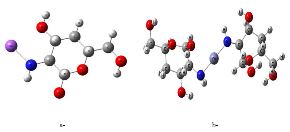
Chitosan in nano scale s indicated in Figure 1 was used to mediate metals. Then the molecular models developed to computationally investigate the chelation (binding) of metal ions by a nano-scale unit of Chitosan. Specifically, the models established two distinct binding configurations: for a monovalent metal ion , a single Chitosan unit interacts via the hydrogen of its amid group (as shown in Figure 2a), while a divalent metal ion is stabilized by being sandwiched between two hydrogen bonds originating from two separate Chitosan units (as shown in Figure 2b). These structures (indicated in Figure 1, 2a, and 2b) formed the basis for subsequent electronic structure calculations.
All molecular structures were optimized and analyzed using the Density Functional Theory (DFT) method, specifically the B3LYP [25-28] functional combined with the STO basis set, implemented within the G09 software package [29]. The resulting calculations yielded several key physical parameters essential for understanding the complexes' electronic properties and stability, including the total dipole moment, the HOMO/LUMO energy (a measure of chemical hardness and reactivity), and the Molecular Electrostatic Potential (MESP).
It is worth to mention that all the model c figures and the generated results figures are reproduced by the molecular modeling software.
.png)
Results and Discussions
Molecular electrostatic potential, total dipole moment and HOMO–LUMO gap
Molecular electrostatic potential (MESP) mapping and electronic descriptors (total dipole moment (TDM), HOMO–LUMO gap ?E) indicate that metal-doping of chitosan substantially modifies its surface electrostatic landscape and electronic reactivity. MESP surface uses a standard color code: red = regions of most negative electrostatic potential (electron-rich, favorable for electrophilic attack / protonation), blue = regions of most positive potential (electron-poor, favorable for nucleophilic attack / anion binding), and green/yellow ? near-zero potential (neutral regions).
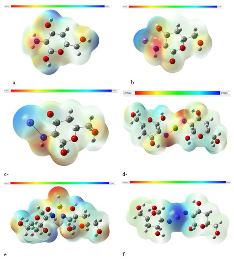
Table1. Calculated TDM as Debye and HOMO/LUMO energy gap (?E) as eV for the studied structures
Structure | TDM ( Debye) | ?E (eV) |
Cs | 2.668 | 11.119 |
Cs-Na | 7.604 | 6.827 |
Cs-K | 10.137 | 6.519 |
Cs-Ca-Cs | 1.138 | 8.489 |
Cs-Mg- Cs | 4.289 | 7.849 |
Cs -Zn- Cs | 1.720 | 5.334 |
For Monovalent metal complexes, both Cs-Na and Cs-K show a clear positive potential centered on the alkali metal (blue) Figures 3b, 3c, while the immediately coordinating O/N atoms exhibit a reduction in negative potential relative to pure chitosan. This indicates partial charge transfer / ionic coordination from the ligand (chitosan O/N) toward the metal.
The reported TDM and ?E from Table1 correlate with these observations: Cs-Na and especially Cs-K show markedly increased TDM (7.604 Deby and 10.137 Deby, respectively) and reduced ?E (6.827 eV and 6.519 eV). These changes reflect increased molecular polarity and enhanced charge separation when a monovalent metal binds. Stronger polarization and lowered gap suggest these alkali-doped chitosan become more electronically polar and more susceptible to electronic/charge transfer processes a potential advantage for interacting with polar contaminants of waste water treatment, but also indicating increased reactivity compared to pure chitosan.
While in divalent metal complexes: Cs–Ca–Cs, Cs–Mg–Cs, Cs–Zn–Cs, Figures 3d-3f, in the complex Cs–Ca–Cs: The MESP for the Ca-bridged system shows the metal as a positive center and the oxygen/nitrogen donors having their negative potential partially depleted. The label Cs–Ca-Cs suggests Ca forms a bridging coordination between two chitosan units; this symmetry/bridging is consistent with the very low dipole moment (1.138 Deby) in Table1. The HOMO–LUMO gap (8.489 eV) is intermediate, indicating moderate electronic perturbation. In the complex Cs-Mg-Cs: Mg shows similar bridging but with a larger dipole moment (4.289 Deby) and a smaller gap (7.849 eV) than Ca; the MESP will therefore show somewhat stronger local polarization and slightly greater charge delocalization than Ca. For the last complex Cs-Zn-Cs: Zn-doped chitosan displays a distinct pattern: although Zn appears as a positive potential center, the complex has the smallest HOMO–LUMO gap (5.334 eV) among the studied systems and a moderate TDM (1.720 Deby). A reduced gap is often associated with greater covalent character or stronger orbital mixing between ligand and metal (i.e., more effective HOMO-LUMO overlap and charge delocalization). The MESP likely shows more delocalized potentials around the coordination sphere, consistent with partial covalence.
Generally, the Ca atom forms more symmetric, less polar bridging with a low TDM, whereas the Mg atom causes moderate polarization. The Zn atom has the highest MESP in terms of reactivity and the lowest band gap energy (?E), indicating stronger metal-ligand orbital interactions.
Highest occupied molecular orbital (HOMO) and lowest unoccupied molecular orbital (LUMO) isosurfaces
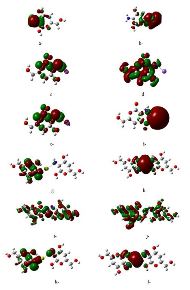
Figure 4 HOMO and LUMO isosurfaces for pure chitosan and for chitosan complexes doped with mono- and divalent metal ions (Na, K, Ca, Zn, Mg). All frontier-orbital visualizations were produced from structures computed using a Slater-type orbital (STO) basis set (isosurface value = 0.02 e·Å?³). The orbital topologies and their energetic ordering reveal systematic modifications of the electronic structure induced by the different metal dopants, with direct consequences for coordination chemistry and adsorption behavior.
Frontier-orbital localization in pure chitosan
In the undoped polymer the HOMO is strongly localized on the amine nitrogen and adjacent hydroxyl oxygen atoms and on the saccharide ring framework Figure 4 (a), indicating these heteroatoms as the principal electron-donating sites. The LUMO is more delocalized along the pyranose backbone and shows comparatively lower density on lone-pair bearing heteroatoms Figure 4 (b), consistent with the backbone providing the primary acceptor character.
Effect of alkali-metal dopants (Na, K)
Complexation with Na? and K? produces only modest perturbations of the frontier orbitals. The HOMO remains predominantly centered on the chitosan N/O donor sites Figure 4 (c, e), while the LUMO displays only weak metal involvement Figure 4 (d, f). These features are consistent with predominantly ionic, electrostatic interactions in which the alkali cations polarize the local potential without substantial orbital overlap or covalent metal–ligand character. Accordingly, Na- and K-doped chitosan are not expected to introduce new, strongly nucleophilic/electrophilic centers beyond those of pure chitosan[30].
Effect of divalent and transition-metal dopants (Ca, Mg, Zn)
Doping with Ca²? and Mg²? induces moderate perturbations, manifested as partial depletion of electron density at coordinating N/O donor atoms and a modest metal contribution to the LUMO (Figure 4 g–j). These features are indicative of Lewis-acidic behavior that moderately enhances local electrophilicity [31]. Zn- containing complexes exhibit the most pronounced changes: appreciable HOMO and/or LUMO density is localized at the metal centers and at the coordinating heteroatoms Figure 4 (k, l,), reflecting stronger metal-ligand orbital mixing and increased covalent character-in the case of Zn, d-orbital participation is likely responsible for the observed orbital shapes. Such electronic reorganization typically correlates with a reduced HOMO-LUMO gap and enhanced redox activity relative to the undoped polymer.
Functional implications for adsorption and reactivity
Concentration of HOMO density on the amine and hydroxyl groups confirms these sites as primary coordination and adsorption hotspots for external electrophiles and incoming metal ions. Alkali-metal modification primarily affects electrostatic potential and is therefore less likely to alter reaction pathways markedly. In contrast, incorporation of divalent and transition metalsespecially Zn, which modifies frontier-orbital character in a way that can favor inner-sphere complexation and facilitate electron-transfer processes. Consequently, the selectivity and binding strength of chitosan-based sorbents toward specific pollutants or co-metals are expected to depend strongly on the identity and electronic structure of the incorporated metal ion.
Correlation with water-treatment performance
Different adsorption and removal mechanisms pertinent to water treatment are immediately translated from the observed changes in frontier-orbital nature. It is anticipated that charged species will be removed primarily through outer-sphere (electrostatic) interactions by alkali-metal modified chitosan (Na?, K?), which maintains HOMO/LUMO localization on the polymer framework and primarily modifies local electrostatics. These materials will work best for the rapid uptake of anionic dyes or for screening by electrostatic attraction, but they are less likely to form strong, inner-sphere complexes with target heavy-metal cations. Ca²?/Mg²? and, in particular, Zn²? doping, on the other hand, enhance inner-sphere chelation and stronger, more selective binding of transition-metal impurities by increasing metal-ligand orbital mixing and electrophilicity at coordination sites[32] . The improved electron-transfer capability implied by the increased metal participation in frontier orbitals (reduced HOMO-LUMO gap and increased covalent character) can help with redox-mediated removal pathways (e.g., reduction of redox-active species or catalytic activation of oxidants) in addition to simple sequestration. Although Na/K-doped materials may be useful where quick, reversible, electrostatic uptake is needed, these electronic changes practically imply that Zn-doped chitosan may provide better performance for the selective capture of heavy metals and for treatments that depend on coupled adsorption–redox mechanisms[33]. The pH-dependence of site speciation, possible metal leaching from doped sorbents, and the necessity of experimentally assessing regeneration and kinetics (batch isotherms, kinetic studies, pH and competing-ion effects, and leaching assays) are significant operational considerations that arise from the electronic structure. Together, the orbital analysis provides a mechanistic basis for selecting dopants to tailor chitosan sorbents toward specific water-treatment objectives[34].
Correlations between MESP, TDM and ?E
Higher TDM (Cs-K > Cs-Na > Cs-Mg > Cs-Zn > Cs > Cs-Ca) correlates with stronger global charge separation in the molecule; the MESP maps for those high-TDM species display blue/red contrasts centered on the metal and the coordinating O/N sites. Smaller ?E (Cs-Zn = 5.334 eV) refer to increased electronic polarizability and chemical reactivity, consistent with MESP patterns that show increased delocalization and reduced localization of negative potential on single atoms. As the monovalent doping (Na, K) produces the largest increase in dipole moment and substantial gap reduction relative to pure chitosan, indicating strong ionic character and large polarization. Divalent metals, especially Zn, induce stronger electronic mixing but not necessarily the highest global dipole, because bridging geometries can restore symmetry.
Chemical/functional implications
The adsorption behavior of complexes with negative MESP regions (O/N) are the primary binding sites for cationic contaminants; metal doping modifies these sites - metals withdraw electron density from coordinating atoms making those local regions less negative and creating positively charged metal centers that can attract anions or form secondary interactions. For selectivity improvements the alkali-doped chitosan (Na/K) shows large polarity and could better interact with polar organic pollutants via dipolar interactions, whereas Zn-doped chitosan may better facilitate charge-transfer interactions and possibly catalyze redox transformations. Ca and Mg bridging may reinforce structural crosslinking (mechanical/structural stabilization) with moderate electronic change.
Conclusion
This work provides a comprehensive density functional theory (DFT) investigation of metal-doped chitosan and highlights the electronic-structure modifications responsible for its adsorption performance in wastewater treatment. The molecular electrostatic potential (MESP) mapping confirmed that pristine chitosan exhibits localized negative potential at O/N donor atoms and positive potential at protonic H atoms, designating them as primary adsorption sites.
Alkali-metal doping (Na?, K?) introduced strong metal-centered positive potentials, substantially increased dipole moments (?7.6–10.1 Debye), and reduced the HOMO–LUMO gap (?6.5–6.8 eV), thus enhancing polarity and ionic character. These features suggest rapid ion exchange and efficient capture of polar contaminants via outer-sphere interactions. In contrast, divalent dopants induced more complex modifications: Ca²? produced symmetric, low-polarity bridging with minimal dipole moment, reinforcing structural stability; Mg²? contributed moderate polarization; whereas Zn²? generated the strongest electronic perturbation, with the narrowest HOMO-LUMO gap (?5.33 eV) and evidence of metal–ligand orbital mixing. Such characteristics highlight Zn-doped chitosan as the most promising candidate for selective and stable binding of heavy-metal cations, with potential contributions from covalency and redox-assisted processes.
Collectively, the results indicate that alkali doping improves electrostatic adsorption and reversibility, Ca/Mg doping enhances mechanical robustness, and Zn doping yields superior selectivity and electronic reactivity. These findings provide a mechanistic framework for tailoring chitosan-based sorbents toward specific wastewater treatment objectives. Future research should integrate solvent-inclusive DFT, protonation-state modeling, and experimental validation (adsorption isotherms, kinetics, regeneration, and leaching assays) to optimize performance and guide real-world application.
Acknowledgements
We are fully indebted with thanks for Molecular Modeling and Spectroscopy Laboratory, Centre of Excellence for Advanced Science, National Research Centre, Dokki, Giza, Egypt, for computational facilities
Conflict of Interest
We declare that there is no conflict of interest
Funding Source Statement
We received no fund for conducting this work
Authors’ Contributions
All participating authors are equally contributed in this work
Data Availability Statement
Data will be available from the corresponding author upon reasonable request
Ethical Approval Statement
Not applicable, this study is theoretical and computational in nature and does not involve human participants, clinical trials, or the use of human tissues, data, or personal information
Informed Consent Statement
Not applicable, this study is theoretical and computational in nature and does not involve human participants, clinical trials, or the use of human tissues, data, or personal information
References
1. Anslyn, E. V.; Dougherty, D. A. Modern Physical Organic Chemistry; University Science Books: Sausalito, CA, (2006).
2. Clayden, J., Greeves, N., & Warren, S. Organic Chemistry (2nd ed.). Oxford University Press. (2012).
3. Fleming, I. Molecular Orbitals and Organic Chemical Reactions, Student ed. Wiley-Blackwell: Oxford, (2009).
4. Crini, G. Recent developments in polysaccharide-based materials used as adsorbents in wastewater treatment. Prog. Polym. Sci.30 (1), 38–70 (2006).
5. Rinaudo, M. Chitin and chitosan: Properties and applications, Prog. Polym. Sci., 31(7), 603–632, (2006).
6. Gupta, V. K., Suhas, Application of low-cost adsorbents for dye removal - A review. Journal of Environmental Management, 90(8), 2313-2342 (2009).
7. Samir, M., Spectroscopic, Hartree–Fock and DFT study of the molecular structure and electronic properties of functionalized chitosan and chitosan-graphene oxide for electronic applications, Nanotechnology Research Centre, vol. 93, (2024).
8. Amujeeb, M. A. , Abdulrahman, S. S., and Lijo, T. G., Density functional theory studies of Pb (II) interaction with chitosan and its derivatives, International Journal of Biological Macromolecules, 74, 483-488, (2015).
9. Hassan A.M.,et al., DFT: B3LYP/LANL2DZ Study for the Removal of Fe, Ni, Cu, As, Cd and Pb with Chitosan, Biointerface Research in Applied Chemistry, 10, 6, (2020).
10. Vasiliu, S., Popa, M., Rinaudo, M. Polyelectrolyte capsules made of two biocompatible natural polymers, Eur. Polym. J,41, 923-932, (2005).
11. Luu, T.-T., Dinh, V.-P., Nguyen, Q.-H., Tran, N.-Q., Nguyen, D.-K., Ho, T.-H., Nguyen, V.-D., Tran, D. X., Tuan Kiet, H. A. Pb(II) adsorption mechanism and capability from aqueous solution using red mud modified by chitosan, Chemosphere287, 132279, (2022).
12. Sheth, Y., Dharaskar, S., Khalid, M., Sonawane, S, An environment friendly approach for heavy metal removal from industrial wastewater using chitosan based biosorbent: A review, Sustain. Energy Technol. Assess, 43, 100951, (2021).
13. Yanat, M., Schroën, K. Preparation methods and applications of chitosan nanoparticles; with an outlook toward reinforcement of biodegradable packaging, React. Funct. Polym.161, 104849, (2021).
14. Abdurrahman, G., Fatimah, B. S., Saifullahi, S., Imam, A. H., Muttaqa, U. Z., Ismael, A. W., Usman, B. H., Adamu, B. E. K., Dmitry, O. B., Omirserik, B., Ahmad, H.-B. A state-of-the-art review on green synthesis and modifications of ZnO nanoparticles for organic pollutants decomposition and CO2 conversion. J. Hazard. Mater. Adv, 17, 100171, )2025(.
15. Nagaraja, B., Jagadeesh, K., Sadam Hossain, G., Verma, G., Palomino, A. M., Reddy, K. R. Novel chitosan-based barrier materials for environmental containment: Synthesis, characterization, and contaminant removal capacities and mechanisms. Chemosphere 348, 140742, (2024).
16. Saiyad, M., Shah, N., Joshipura, M., Dwivedi, A., Pillai, S. Modified biopolymers in wastewater treatment: A review. Mater. Today Proc. 91, 312-323, (2024).
17. Abdel-Karim, A., Ismail, S. H., Bayoumy, A. M., Ibrahim, M., Mohamed, G. G. Antifouling PES/Cu@Fe3O4 mixed matrix membranes: quantitative structure-activity relationship (QSAR) modeling and wastewater treatment potentiality. Chem. Eng. J. 407, 126501, (2021).
18. Sadek, A. H., Abdel-Karim, A., Mohsenpour, S., Ismail, S. H., Bayoumy, A. M., Ibrahim, M., Mohamed, G. G. Polysulfone-based mixed matrix membranes loaded with a multifunctional hierarchical porous Ag-Cu dendrites@SiO2 core-shell nanostructure for wastewater treatment. Process Saf. Environ. Prot. 175, 677-691, (2023).
19. Refaat, A., Elhaes, H., Ibrahim, M. Design and Implementation of Green Route Using Biopolymers and Water Hyacinth for Wastewater Treatment. In Advances in Green Materials Engineering; Ikhmayies, S. J., Ed.; Springer Nature Switzerland AG, (2024).
20. El-Sheikh, A. S., Abdelazi, N. S., Amin, K. S., Elhaes, H., Ibrahim, M. A. Application of Chitosan/Graphene and Chitosan/Graphene Oxide Composites for Removal of Cu and Pb. Sci. Rep.15, 28905, (2025).
21. Atta, D., Fakhry, A., Ibrahim, M. Chitosan Membrane as an Oil Carrier: Spectroscopic and Modeling Analyses. Der Pharma Chemica.7 (10), 357-361, 2015.
22. Teixeira, C. C., Pereira, A. K. D. S., Cavallini, G. S., Pereira, D. H. Triclosan Adsorption on Chitosan: Computational Study of Molecular Interactions and Potential for Environmental Remediation. Polymers (Basel) 17, 487 (2025).
23. Schirmer, J., Review of the foundations of time-dependent density-functional theory (TDDFT). Phys. Chem. Chem. Phys.27, 4992-5003 (2025).
24. UbaZango, Z., Abdurrahman, G., Shittu, F. B., Shehu, S., Haruna, I. A., UbaZango, M., Wadi, I. A., Bello, U., Haruna, A., Keshta, B. E., Bokov, D. O., Baigenzhenov, O., Hosseini-Bandegharaei, A. A state-of-the-art review on green synthesis and modifications of ZnO nanoparticles for organic pollutants decomposition and CO2 conversion. J. Hazard. Mater. Adv.17, 100171 (2025).
25. Frisch, M. J. et al. Gaussian 09, Revision C.01. Gaussian, Inc., Wallingford, CT (2010).
26. Becke, A. D. Density-functional thermochemistry. I. The effect of the exchange-only gradient correction. J. Chem. Phys.96, 2155–2160 (1992).
27. Petersson, G. A., Al-Laham, M. A. A complete basis set model chemistry. II. Open-shell systems and the total energies of the first-row atoms. J. Chem. Phys.94, 6081–6090 (1991).
28. Lee, C., Yang, W., Parr, R. G. Development of the Colle-Salvetti correlation-energy formula into a functional of the electron density. Phys. Rev. B37, 785–789 (1988).
29. Hehre, W. J., Stewart, R. F., Pople, J. A., Self?Consistent Molecular?Orbital Methods. I. Use of Gaussian Expansions of Slater?Type Atomic Orbitals. J. Chem. Phys.51, 2657-2664 (1969).
30. Syeda, S. E. Z., Khan, M. S., &Skwierawska, A. M. Chitosan-based modalities with multifunctional attributes for adsorptive mitigation of hazardous metal contaminants from wastewater. Desalination and Water Treatment, 320, 100679. (2024).
31. He, J., Wang, L., Zheng, K., Hu, S., Zhang, X., & Mu, Z. Coordination of Mg2+ with Chitosan for Enhanced Triboelectric Performance. Polymers, 17(8), 1001. (2025).
32. Sopanrao, K. S., & Sreedhar, I. Sustainable Zn2+ removal using highly efficient, novel, and cost-effective chitosan-magnetic biochar composite. Environmental Science and Pollution Research, 1-22. (2024).
33. Moralez, L., Nakasu, P., Hallett, J. Preparation of hybrid ?-chitosan–squid pen protein hydrogel beads by ionic liquid regeneration for adsorption of copper (ii) and zinc (ii) from wastewater. Soft Matter, 21(13), 2480-2492 (2025).
34. Mittal, M., Tripathi, S., & Shin, D. K. Biopolymeric nanocomposites for wastewater remediation: an overview on recent progress and challenges. Polymers, 16(2), 294. (2024).

This work is licensed under a Creative Commons Attribution 4.0 International License.